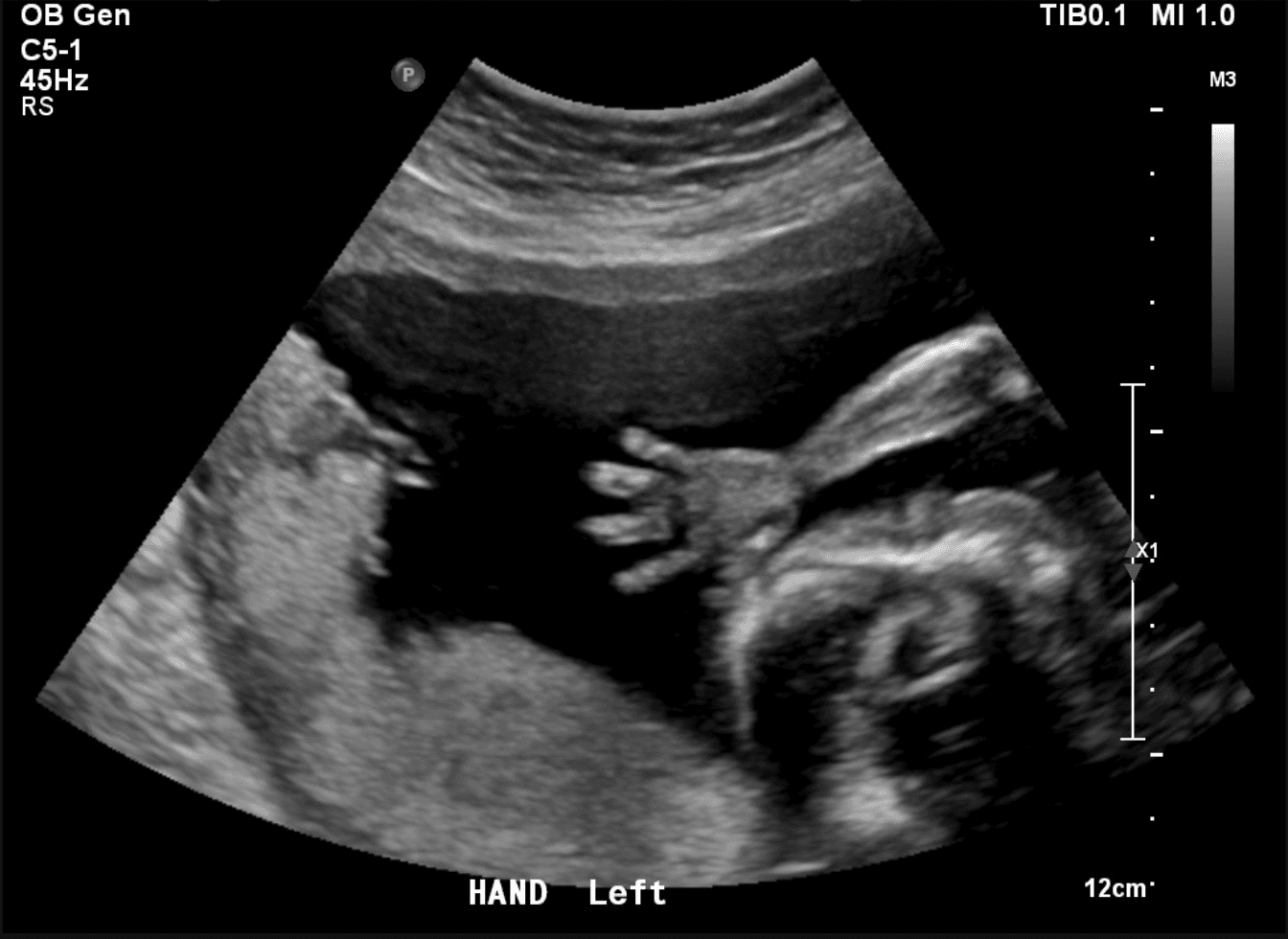
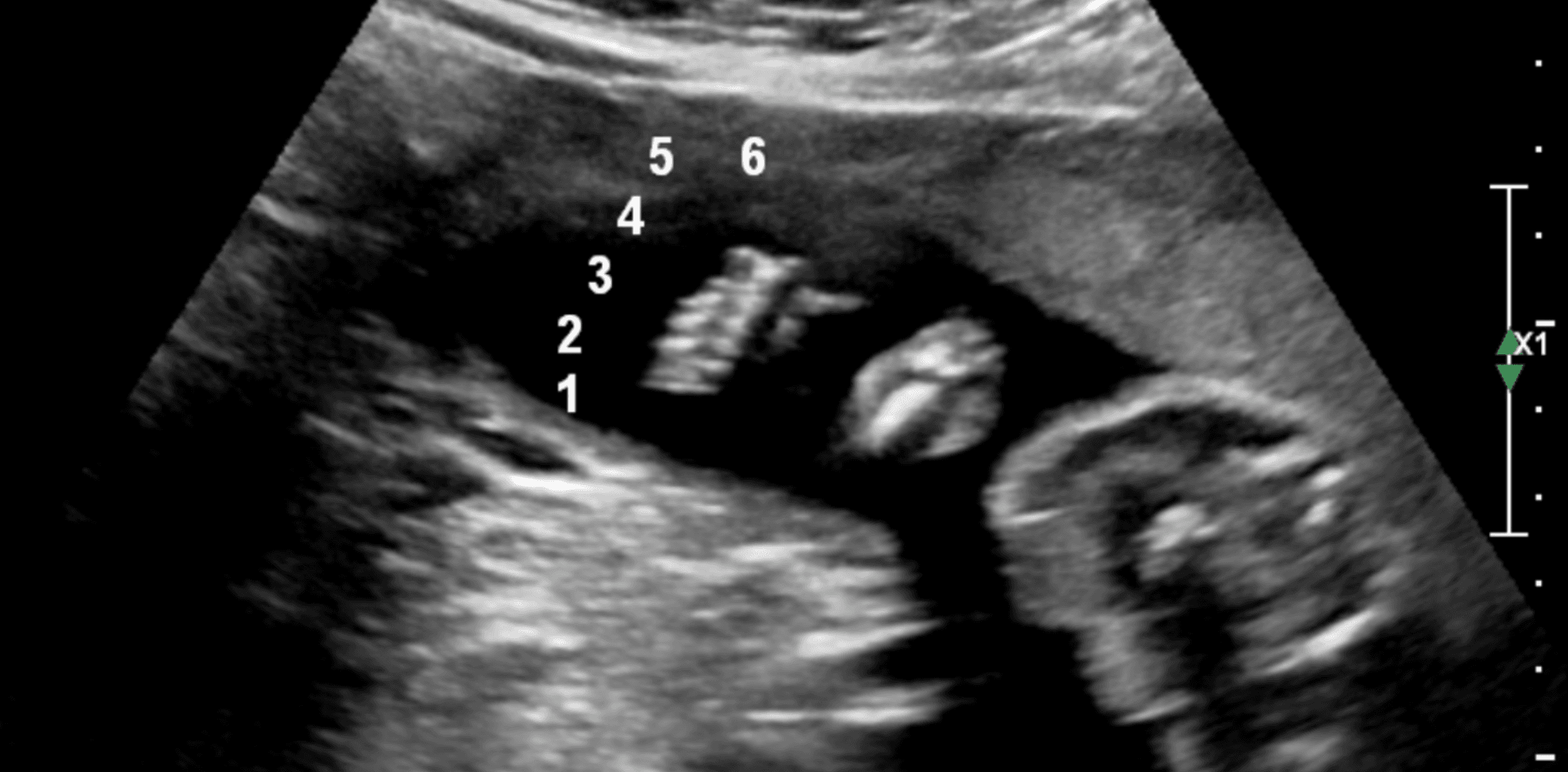
During this detailed anatomy scan performed at 20 weeks of gestation, we identified something special — an extra digit on the foot.
No matter if you have 5 or 6 toes, we love each and every one of them.
What is Polydactyly?
Polydactyly (from the Greek poly meaning "many" and daktylos meaning "finger") is the presence of extra fingers or toes. It's one of the most common congenital limb variations, occurring in approximately 1 in every 500-1,000 births worldwide.
There are three main types:
- Postaxial polydactyly: an extra digit on the outer (little finger/toe) side. This is the most common type overall
- Preaxial polydactyly: an extra digit on the inner (thumb/big toe) side
- Central polydactyly: an extra digit between the middle fingers or toes. This is the rarest form
The extra digit can range from a small, soft nubbin of tissue to a fully formed finger or toe with its own bone structure and nail.
What Causes It?
Polydactyly often runs in families — it can be inherited as an autosomal dominant trait, meaning only one parent needs to carry the gene for it to be passed on. In many cases, it occurs in isolation with no other health implications. Occasionally, it may be associated with certain genetic conditions, which is one reason the anatomy scan examines the baby's full anatomy comprehensively.
In most cases, polydactyly is a completely harmless variation that requires no intervention unless the family chooses it for cosmetic or functional reasons.
Treatment Options
Treatment decisions are always made in consultation with your child's medical team. Here is a general overview of what may be discussed:
If parents choose to address an extra digit, treatment depends on its structure:
- Soft tissue only (no bone): can sometimes be addressed shortly after birth with a simple procedure
- Extra digit with bone structure: typically requires a minor surgical procedure, usually performed when the child is between 1-2 years old
- Functional extra digits: in some cases, particularly with thumbs, the decision about which digit to keep requires careful assessment of function and blood supply
Many families choose to leave extra digits as they are — it's a personal decision with no medical urgency.
The Value of the 20-Week Anatomy Scan
The anatomy scan (also called the anomaly scan or mid-pregnancy scan) is one of the most important ultrasounds during pregnancy. Performed between 20 and 24 weeks, it provides a comprehensive assessment of your baby's development.
What the Scan Examines
- Head and brain: structure, ventricles, and cerebellum
- Face: eyes, nose, lips (checking for cleft lip)
- Spine: full length from neck to sacrum
- Heart: all four chambers, valves, and major vessels. This is one of the most detailed assessments, as the heart is the organ most commonly affected by congenital variations
- Abdomen: stomach, kidneys, bladder, and bowel
- Limbs: arms, legs, hands, and feet — including counting fingers and toes
- Placenta: position and cord attachment
- Amniotic fluid: volume assessment
Why Early Discovery Matters
Finding variations like polydactyly during pregnancy helps parents:
- Prepare emotionally: rather than being surprised at birth, parents have time to process, ask questions, and research
- Plan with their healthcare team: discuss whether any intervention will be needed and when
- Reduce anxiety at birth: knowing what to expect means delivery day can focus on the joy of meeting your baby
- Access specialist support if needed: in the rare cases where polydactyly is associated with other findings, early detection allows for comprehensive planning
The vast majority of anatomy scans confirm a healthy, normally developing baby. When something unexpected is found, having the information early is always better than learning about it later.
This article is for general information purposes only and is not intended as medical advice. Always consult your healthcare provider for guidance specific to your situation.
Book your anatomy scan at Ultrasound Ireland. Our experienced sonographers perform detailed assessments in a warm, supportive environment. Call 01 210 0232.
This article is for general information only and is not medical advice. It is not a substitute for professional diagnosis or treatment — always speak to your GP or another qualified healthcare provider about your own situation.